Surface Matters: How Turf Variations Shape Betting Movements in Domestic Leagues
Written by Amir Friedrich · Sep 22, 2026
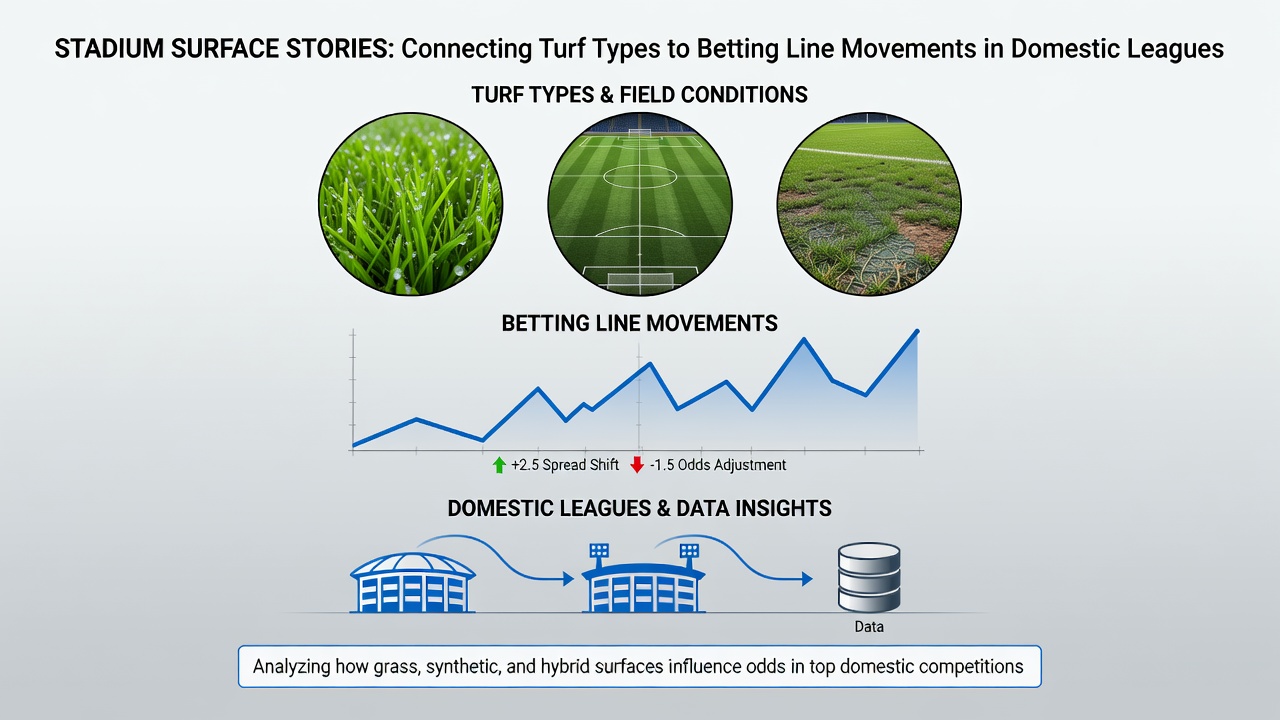
Surface Matters: How Turf Variations Shape Betting Movements in Domestic Leagues
Domestic football leagues present distinct patterns when stadium surfaces enter the equation, and those patterns extend directly into betting line adjustments across multiple markets. Natural grass, artificial turf, and hybrid systems each carry measurable effects on ball roll, player traction, and injury frequency, which in turn influence totals, handicaps, and player props offered by bookmakers.
Turf Categories and Performance Data
League records compiled through 2026 reveal consistent differences in average goals per game depending on surface type. Natural grass pitches, still the majority choice in top European divisions, tend to produce slightly lower scoring rates when rainfall increases during autumn months, while artificial surfaces maintain more predictable bounce and speed regardless of weather. Hybrid systems, which combine natural grass with synthetic fibers, sit between the two extremes and show reduced variance in match statistics according to season-long datasets.
Researchers tracking MLS clubs that split home fixtures between the two surface types documented higher sprint distances and fewer substitutions on artificial turf, a trend that correlates with elevated over-line percentages in those venues. Similar patterns appear in several Scandinavian and Eastern European leagues where artificial installations remain common, though the magnitude of the effect varies by climate zone.
Line Movement Patterns Across Markets
Bookmakers adjust totals and Asian handicap lines in advance of kickoff when surface information becomes available through official team sheets and weather reports. Data from September 2026 fixtures indicated that matches scheduled on artificial turf opened with totals lines 0.25 to 0.5 goals higher than comparable natural-grass venues in the same league, reflecting historical scoring rates. Movement continued after line release when starting lineups confirmed the presence or absence of players with documented artificial-turf injury histories.
Handicap markets also shifted when teams traveled from natural-grass home grounds to artificial away venues. Observers noted that home sides on artificial turf posted stronger results against visitors unaccustomed to the surface, producing measurable drift in both three-way and Asian handicap prices during the 48 hours before kickoff.
League-Specific Observations
In leagues where artificial turf appears in multiple stadiums, such as certain North American and Australian competitions, aggregate statistics show a modest increase in cards and corners compared with natural-grass equivalents. The faster ball speed contributes to more frequent wide-area play, which in turn raises corner counts and affects over/under corner lines. European domestic leagues with only isolated artificial pitches display smaller but still detectable effects concentrated around those specific fixtures.
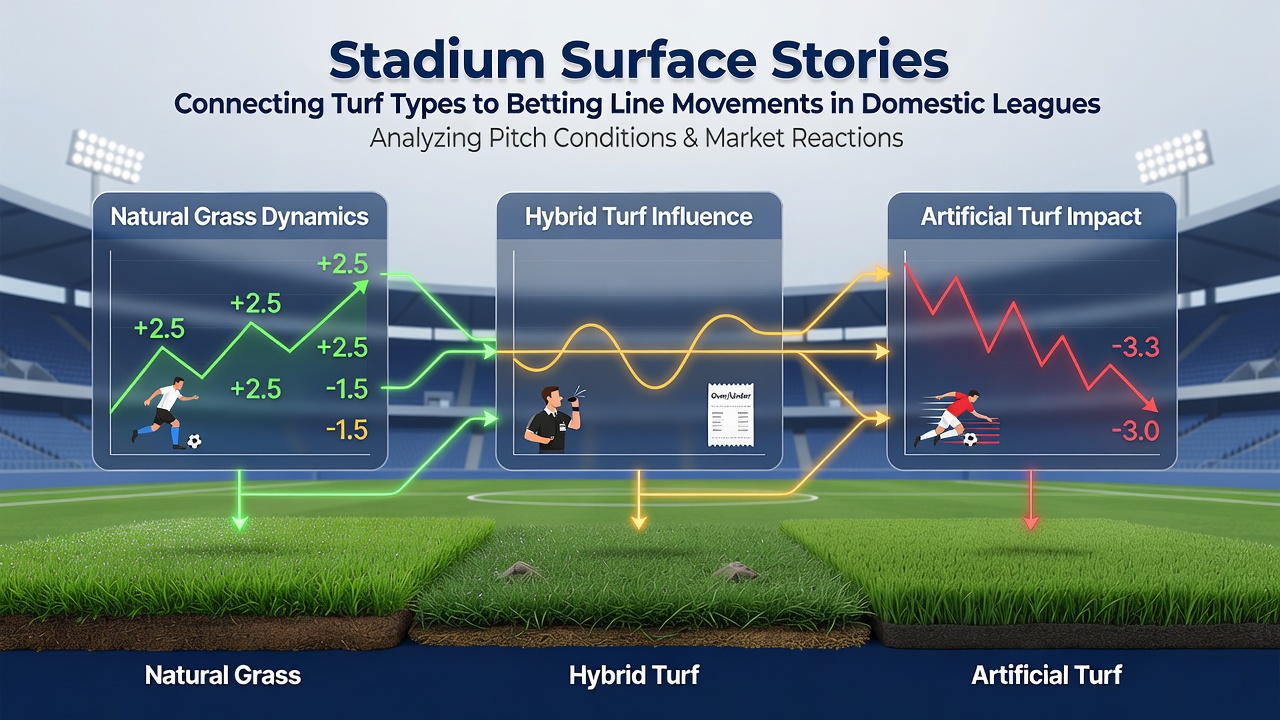
Player availability reports released midweek frequently trigger further line adjustments. Teams with multiple players returning from injury tend to see totals lines move downward when the upcoming match is on artificial turf, while the opposite movement occurs when the same squad travels to a natural-grass venue. These adjustments reflect documented differences in re-injury rates across surface types.
External Data Sources and Research Integration
Studies published by sports science departments at several universities have quantified the biomechanical differences between surfaces, providing quantitative inputs that betting markets incorporate into model updates. A report from the FIFA Technical Department examined match data across multiple confederations and confirmed that artificial surfaces produce higher average ball speeds in the final third, a factor that directly feeds into expected goal calculations used by professional betting syndicates.
Additional findings from the Sports Science Institute of South Africa tracked injury incidence across a full domestic season and noted elevated lower-limb strain rates on certain artificial installations, information that propagates into player-prop markets and team totals lines well before official announcements.
Conclusion
Stadium surface characteristics generate measurable, repeatable influences on match statistics that betting markets translate into line movements across domestic leagues. Natural grass, artificial turf, and hybrid installations each produce distinct distributions in goals, cards, corners, and player availability, and those distributions appear in opening lines and subsequent adjustments. As data collection improves and models incorporate finer surface metrics, the connection between pitch type and market behavior continues to sharpen for every league that publishes detailed fixture information.